020 7242 4986
London: 2-3 Gray's Inn Square
Cardiff: One Caspian Point

considered. strong.


news from 2006

Local Government Law - An Update

16.11.2006

Local Government Law - An Update
Thursday, November 16, 2006


This is the fourth seminar on a series we run in conjunction with Lawrence Graham. The format is very interesting as the invitees are asked, in advance, which topics they woudl like to have covered at the session.

On 15 November, the topics our members presented were:

James Findlay on probity issues (given by Owen Willcox as James was unable to attend):

Probity Presentation

Damien Welfare presented two papers:

Local Government Powers on Charging and Trading

Charging and trading powers

An update on Freedom of Information issues

FoI Update


Stop Criminalising Air Investigations

30.10.2006

Stop Criminalising Air Investigations
Monday, October 30, 2006


In an unprecedented joint statement, four of the world’s leading air safety bodies have issued a joint resolution condemning recent trends by enforcement and judicial bodies towards taking criminal action after aviation accidents.

Gerard Forlin, one of our barristers and an acknowledged expert on health and safety, spoke at the Worldwide Symposium on Air Navigation: Flying through Congested Skies which was sponsored by the International Civil Aviation Organization (ICAO) and the Institute of Air and Space law in Montreal on 28 September. The joint resolution was crafted after the Panel session on 29th and Gerard had a hand in drafting the resolution. Gerard’s forty minute speech at the symposium to the world-wide aviation industry had acted as a catalyst to the ensuing discussions. This speech followed an earlier one, given in Hong Kong to an IATA Legal Symposium in February 2006.

This resolution marks a major change in the management of aviation accident investigations. The joint statement is from the Flight Safety Foundation, Academie Nationale de l’Air et de l’Espace, Royal Aeronautical Society and the Civil Air Navigations Services Organisation.

Gerard is well respected in the field of health and safety, including aviation, and is retained by a number of major corporations worldwide. You can find out more about Gerard’s practice by going to either of the links below:

This one will give you an overview of Gerard’s practice:

Also see Gerard Forlin's website

Click here for Press Release

Chambers and Innovation in Knowledge Management

23.10.2006

Chambers and Innovation in Knowledge Management
Monday, October 23, 2006


I am very pleased to announce that our Chambers' Director, Lynne Orsborn, was a member of the team which won the Innovation in Knowledge Management Award at the 2006 Legal IT Forum annual awards dinner held at Gleneagles in mid- October.


Lynne started work on the award winning project, designing a Taxonomy to allow for easy communication between law firms and their clients, when she worked in-house at Shell. She was in a team, co-ordinated under the aegis of LITIG (Legal IT Innovators Group), with Andrew Dey and Victoria Martin from Barclays? Legal departments and Charlotte Russell-Hargreaves who was at Reuters and has now moved to Lloyd?s TSB. Their brief was to design a mechanism whereby the plethora of information sent out by law firms relating to both legal developments and training could be managed in-house where resources are more stretched.


Very early it was recognised that the issue was over how to communicate effectively. A taxonomy (classification scheme) is a method whereby you can map very complicated internal taxonomies onto a simple list of terms which in-house legal departments could transfer directly onto their own intranets, using nothing more sophisticated than a spreadsheet, if necessary. A number of top-10 solicitors? firms have already signed up to use the taxonomy, and more are in the pipe-line.


To test its applicability, Barclays Legal also developed a training calendar which has the taxonomy at the heart of it. This won the Best In-house Counsel IT Project award, too.


Chambers has supported Lynne?s continuing involvement in this area as we recognise it as vital part of simplifying legal communications with clients and collaborating with other solicitors and Chambers.. Also we are using the concepts as part of the revision of our own website. Watch this space?


For more information on the taxonomy, go to
LITIG Taxonomy


and to download it, use this link


Taxonomy link


Mark Lowe
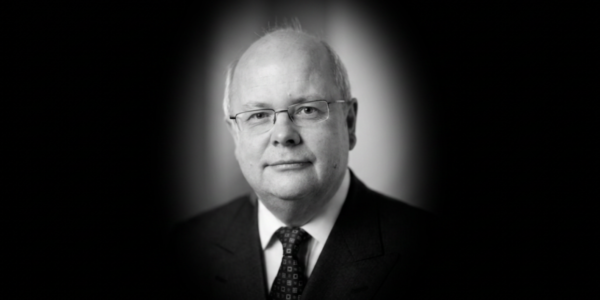
Head of Chambers


Disability Discrimination - Seminar analyses forthcoming changes

19.10.2006

Disability Discrimination - Seminar analyses forthcoming changes
Thursday, October 19, 2006


The forthcoming changes in disability discrimination legislation were the subject of a well-received seminar presented by 2-3 Grays Inn Square and DMH Stallard Solicitors to delegates from the public sector on 18th October 2006 at the Victoria Park Plaza Hotel in central London.

With the new general duty on public authorities to promote equality of opportunity only weeks away from coming into force, the creation of the new Commission for Equality and Human Rights, and the developing nature of the disability legislation, the seminar provided a multi-disciplinary overview of where the public sector finds itself at the end of 2006, as we await implementation of the Equality Act 2006.

Guest speakers from the Disability Rights Commission, Catherine Casserly and Sarfraz Khan gave, respectively, an analysis of the new duty on public authorities and on disability in education. Josef Cannon analysed the main legal concepts in the legislation, before specific sessions on Housing, delivered by Clare Parry, and Enforcement, by Damien Welfare (all of chambers). Jenny Thorp, Employment partner at DMH Stallard, presented an update on the DDA in the employment context and also chaired a session on provision of goods and services.

Members of Chambers are able to advise on, and undertake representation concerning, all aspects of the legislation, including the introduction of the new duty on public authorities under Part 5A from 4th December 2006.

Josef Cannon's Notes on DDA seminsr October 2006

Damien Welfare presentation

Clare Parry - Notes on DDA and housing and property issues


Mary Cook - Planning Junior of the year

02.10.2006

Mary Cook - Planning Junior of the year
Monday, October 02, 2006


We are delighted to announce that Mary Cook won the Environment/Planning Junior title at the Chambers & Partners Bar Award 2006 ceremony which was held at the end of September at the Grosvenor House Hotel in London. Unfortunately, Mary was unable to attend the ceremony but was very pleased by the recognition both of the range of her clients and of the scope of the work she has been doing.

On hearing the news, Mary said “a big thank you to all those who made winning this award possible which, of course, includes loyal clients and instructing practitioners as well as the support team at 2-3 Gray’s Inn Square. They all know who they are and I look forward to continuing success in the year ahead”.

Mary Cook - Planning Junior of the Year

Click here for full Awards breakdown


Planning Update

18.09.2006

Planning Update
Monday, September 18, 2006


We have just held our regular Planning Update session in Cardiff (we ran one in London earlier this year). We had ninety delegates at the event, mostly from Wales, the South West and the Midlands. We had a diverse range of topics: from dealing with development on floodplains to how to make sure your planning application is successful via phone masts and wind farms and how to look after gypsies and travellers.


Everyone agreed that it was a very informative day.


If you would like to be told of future events and are not on our mailing list, please contact phild@cornerstonebarristers.com.

Legal 500 2006

15.09.2006

Legal 500 2006
Friday, September 15, 2006

The 19th edition of the Legal 500 was launched on Thursday 14 September. Members of Chambers did very well and we were mentioned in a number of sections.

Category:

Disabled access
   Chambers

Leading Civil Common Law Sets
   Chambers

Administrative and Public Law
   Chambers
   Silks
   Juniors

Consumer
   Chambers
   Silks
   Juniors

Environment
   Chambers
   Silks
   Juniors

Health and Safety
   Chambers
   Silks
   Junior

Licensing

   Chambers
   Juniors

Planning
   Chambers
   Silks
   Juniors

Public Inquiries
   Junior

If you want to read more, go to
http://www.legal500.com/l500/frames/barr_fr.htm.

New Head of Chambers and New Silks

01.08.2006

New Head of Chambers and New Silks
Tuesday, August 01, 2006


The members of 2-3 Gray's Inn Square are pleased to announce that MARK LOWE QC has been elected as Head of Chambers.


Our thanks to ANTHONY PORTEN QC, who remains in practice, for his leadership and his contribution to the significant development and growth of Chambers during his five year term as Head of Chambers.


New Silks
We are proud to announce that David Matthias and Morag Ellis have been appointed as Queen?s Counsel and will take up their roles in October.


New Members Of Chambers
We are also pleased to welcome the following new Members:


Jon Holbrook (formerly at Hardwicke Building) joined us on 1st July.


Kuljit Bhogal (formerly at 199 Strand) will join us from September.


Clare Parry and Sophie Weller, following the successful completion of pupillage.


Both Jon and Kuljit will be members of Chambers? Housing and Property team which is already a recognised leader in Social Housing, working for over 300 local authorities, RSLs and private clients.


Telecommunications masts - human rights

01.07.2006

Telecommunications masts - human rights
Saturday, July 01, 2006


The Compatibility of Part 24 of the General Permitted Development Order with the Convention has recently been considered by the Court of Appeal in Nunn v Leeds City Council and T-Mobile [2005] EWCA 101. This was a procedurally unusual case which started life as a prior notification under Part 24. T-Mobile served the requisite notice on Leeds, who publicised the application. Dr Nunn and others objected on grounds of appearance, damage to amenity and health risks/fears. Leeds duly informed T-Mobile that they wished to consider appearance and siting. Officers reported to the Planning Committee, recommending refusal on grounds of visual harm to AONB, Conservation Area and residential amenity. Members resolved not to approve on these grounds. Written notification to T-Mobile was not sent until the 57th day.


After considerable discussion between Leeds and T-Mobile, including consideration of alternative sites, T-Mobile commenced building the mast, claiming that they had planning permission by virtue of the "time-out" provisions. This caused consternation locally and Leeds served enforcement notices. These were appealed. At the Inquiry, Dr Nunn and her husband (also a doctor) gave evidence of their firm belief that the presence of the mast some 120m from their house would exacerbate her propensity to migraines and, by reason of these concerns, adversely affect their residential amenity. They called an expert witness, Dr Hyland who is a well-known proponent of theories attributing harmful effects to mobile phone masts. They and others also supported the Lpa's case on visual harm.


T-Mobile had appealed on Ground (b) of s.174 TCPA, relying on their alleged pd rights. They had also included a Ground (a) appeal on the planning merits. The Inspector, after a 3 day inquiry, found that the Ground (b) appeal was well founded because the mast enjoyed planning permission by virtue of 56 days having elapsed without the Lpa notifying them to the contrary. Therefore, he held, there was no need for him to consider the Ground (a) appeal and the planning merits.


Dr Nunn, having no right of appeal as a third party to an enforcement notice appeal, launched proceedings for judicial review. She claimed that the failure of the inspector to consider the damage to her amenity/health concerns constituted a breach of her Article 6 right to a fair hearing in the determination of her civil rights. Sullivan J refused permission on paper. Collins J refused permission after an oral hearing. Undeterred, Dr Nunn sought permission from the Court of Appeal which Carnwath LJ granted. At his suggestion, the substantive hearing unusually took place before the Court of Appeal sitting as a court of first instance.


The argument, as it developed, focussed on "the process" of Part 24 and the inquiry overall. Leeds chose to take no part in the litigation. It was submitted that, by virtue of Dr Nunn's representations made pursuant to the statutory consultation, determination of the prior notification and/or appeal constituted a determination of her civil rights for the purposes of Article 6. This contention raises interesting questions as to whether any of Dr Nunn's "civil rights" were engaged and whether the Part 24 process constituted a "contestation" in relation to her, as well as T-Mobile. The Inspector, she said, should have construed the enforcement/appeal provisions of TCPA in such a way as to give effect to her Convention rights. Alternatively, if this was impossible, the Court should make a declaration of incompatibility and/or strike down elements of Part 24.


In the event, these questions were not authoritatively decided, although Waller LJ said that it seemed clear to him that Dr Nunn's Article 6 rights had been infringed. He went on:


"Both T-Mobile and Dr Nunn had, under Article 6, the right to expect that those points would be determined by the LPA, by an effective decision which might be the subject of an appeal to an Inspector, controlled by the court by Judicial Review or even such as to be under the direct control by the court by Judicial Review."


Laws and Wall LJJ agreed. The basis of these statements, however, was concessions made for the purposes of the hearing, because it became clear that the Court was most interested in deciding what "the consequence" of the situation should be. The Court accepted the submissions of the First Secretary of State and T-Mobile that, if there was a breach, neither of those parties had done anything wrong but that Dr Nunn had remedies against the Lpa under s.8 Human Rights Act 1998 (damages) and by way of complaint to the Ombudsman (potential compensation). On this basis, the claim was dismissed. Permission to petition the House of Lords on the basis that damages and/or the possibility of compensation would not secure Dr Nunn's Convention rights was refused.


The Court of Appeal's decision will doubtless be of some concern to Lpas as mistakes occur quite regularly in the implementation of Part 24. Ombudsman decisions have ended not to be very generous; it remains to be seen whether s.8 litigation will be more productive.


Whilst Nunn is a sensible, pragmatic decision, the judgments do not grapple with the "bigger" questions under the Convention. To what extent are views or freedom from worry "civil rights"? Is a process for regulating the grant of planning permission by development order a "contestation"? On "reading in", however, Waller LJ said:


"The scheme and the legislation can be operated compatibly with the Convention. It is the LPA which has infringed Dr Nunn's convention rights, but at the same time established the right of innocent third parties T-Mobile to commence the erection of a mast for which the GDPO grants planning permission. to contemplate writing in words which will have the effect of undoing the rights of a third party, and indeed forcing the third party to remove that which it has had a right to erect, simply because the statute has been operated by the LPA in a way that infringes a convention right seems to me to be going beyond what Section 3 had in contemplation."


Industry challenges a complete success!

01.06.2006

Industry challenges a complete success!
Thursday, June 01, 2006


The action brought by the BBPA, together with the ALMR and the BII, was part of a larger strategy which sought to clarify the powers of local authorities under the new Act. From the publication of the original White Paper the concern of many licensees and industry leaders had been that the councils would tend towards over-regulation in respect of their businesses. This fear was well understood by the government which (in a phrase frequently repeated in the statutory Guidance) intended that their licensing should be handled with "a light touch". In the absence of any objection each business should be registered with the minimum of regulation and interference. Where objections did arise, these should be focused upon the four "licensing objectives", as set out in the legislation.


Addressing these concerns, in mid 2004 our industry clients set up a comprehensive system which attempted to review the initial draft policies published by each of the 376 local authorities in the country. This was no easy task, but it was one which they substantially achieved, finally reviewing and commenting upon the great majority of the published draft policies. Of these, some 30 policies gave ? and continue to give - rise to particular concerns. Three policies were finally selected to be the subject of judicial challenge: Doncaster, Gloucester and Canterbury. The first, Doncaster, accepted the industry?s concerns and agreed to amend its policy. Following a successful application to Mr Justice Collins, who presides over the Administrative Court, Gloucester too agreed to recommend to it?s councillors that the proposed amendments should be made. That left just Canterbury...


On 15th November 2004 Dr Martin Rawlings of the BBPA had written an eight page letter to Canterbury expressing his serious misgivings about aspects of its draft policy. That letter received only a formal acknowledgement. On 21st March 2005, as required by the pre-action protocol under the Civil Procedure Rules, a letter before action was written by the specialist licensing solicitors who were instructing us, Poppleston Allen. This time the letter received a more direct response, denying the substance of the complaint and asserting that the policy, now published following its adoption by the full committee in December 2004, accorded with the law. Proceedings were commenced!


The substance of the industries complaint was twofold:


That the Policy unlawfully prescribed what information should be included within an applicant?s Operating Schedule ? here the complaint was that the Policy repeatedly required applicants to include information within their applications, even though neither the primary legislation nor consequent regulation conferred any such duty upon applicants, or even any entitlement upon the licensing authority to make any such request. Examples of unlawful prescription included requirements for: evidence of measures to promote the licensing objectives, details of occupancy capacity and the adoption of numerous listed and so-called examples of ?best practice?.


Unlawful claims to powers to impose conditions or reject applications regardless of relevant representations if Operating Schedules were not completed in the prescribed manner.


The hearing before Mr Justice Richards occupied two days. We will leave it to the Defendant?s Counsel to set out the substance of the arguments which they endeavoured to advance before the court. Suffice it to say, that the reserved judgement of Richards J left the actual outcome beyond any doubt, accepting that the policy was over-prescriptive and failed to make clear that it was for applicants to determine the contents of their applications. Whilst Canterbury?s proposed addendum represented a substantial improvement, there was still a risk that applicants would not read it in the context of the document as a whole. The learned judge concluded that until the rest of the policy were recast the unlawful elements would "not be wholly cured".


Why then did Mr Justice Richards not grant relief by quashing the policy, despite having found that the policy was unlawful? Principally because to quash the Policy in the critical period prior to 7th August 2005 could be "detrimental to good administration". As regards a declaration, he felt that this would be unnecessary, it being sufficient that his judgment spoke for itself, "not just to the council but also to the other licensing authorities whose policies are under examination".


So in the final analysis, was there a winner? From the industry?s point of view this ? and indeed all three ? actions were a complete success; the High Court has affirmed with the greatest clarity that the ?light touch? to which the government aspired, has indeed been carried through into the words of the legislation. It is to be hoped that local authorities throughout the land will take note.


The final word? Well, that can be left to the costs order of Richards J: "The defendant authority will be ordered to pay the claimant's costs including the costs of the permission hearing. In reaching that decision I take into account the fact that the addendum was not in force or even proposed when the claim was brought. It is not even now in effect, and when it comes into effect it will not wholly cure the problems identified in my judgment.


The Council has not accepted that the policy was unlawful either before or after the addendum becomes part of it. The mere indication that the policy would be rewritten in due course is not, as it seems to me, a sufficient reason to have made it inappropriate for the claimants to proceed with this case and to establish the matters that they have established as set out in my judgment. They have, to my mind, achieved substantial success in the claim...


Of course, it is a misfortune for the defendant authority that it has been singled out as a test case and in that sense bears the burden of costs that might in an ideal world be distributed between the many authorities that may be affected by this matter. But there it is. They were the defendant, they fought the case and they lost".