
Bentley Solar Farm Refused: Heritage impact outweighs renewable benefits
Climate, Planning & Environment, Local Government
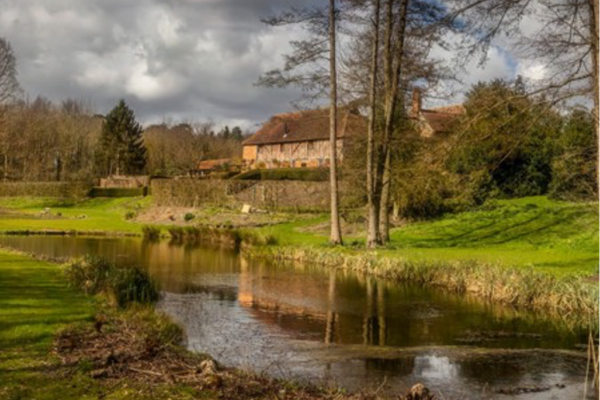
A major application for a solar proposal in Suffolk has been refused on appeal.
By a decision of 15 July 2026, Inspector Zoë Hill refused an appeal by Green Switch Capital for permission for a 40 MW solar farm with associated infrastructure at Grove Farm, Bentley, Suffolk (48.3ha). Given the Climate Emergency, the importance of generating green energy, and the attendant policy support for renewable development in national policy, permission for solar farms is often treated as a fait accompli. So, what prevented the development coming forward here? In short, a powerful combination of heritage impacts coupled with an adverse impact on a valued landscape.
Heritage (Conservation area)
Between the submission of the application and its refusal, the Council designated the Bentley Conservation Area (“BCA”) which included the full Site. Although in the course of the inquiry, the Appellant sought to raise questions about the timing of the designation, the Inspector did not consider this was a matter for her to consider [54]. The Inspector identified that the character of the BCA derived from the sum of medieval buildings, ancient woodlands, historic farmsteads and associated farmlands and it was this holistic system of farming and land management which could be readily perceived across the BCA [60]. Whilst historical links to the landholding Tollemache family were not largely observable on the Site, the Inspector highlighted the wealth of the historical record in confirming and enriching the appreciation of the historic interest of the BCA [61]. The Inspector rejected the suggestion that Appellant’s scheme would re-introduce historic field patterns, recognising a lack of clarity about the historic composition of the Site [65], noting a local expert had considered that open field systems were likely to be historically used [64].
The Inspector considered that the proposed development would not preserve the character or appearance of the BCA, but would rather appear as “a stark, modern, utilitarian, and industrial intrusion” [68], which would be contrary to the clear expectations of s.72 of the Planning (Listed Buildings and Conservation Areas) Act 1990 (“LBA”).
Heritage (designated and undesignated assets)
As above, part of the justification for the designation of the BCA was the presence of a manorial landscape evidenced by the interrelationship of farmlands, agricultural buildings, manor houses, and surrounding tenant buildings. Unsurprisingly therefore, the proposal also impacted a number of designated (Grade I, II, and II*) heritage assets as well as some undesignated assets. The Inspector identified there to be less than substantial harm (at a moderate level) to the higher graded assets (recording that this does not amount to a less than substantial planning objection [46]), having recognised that there would be “harm to the agrarian setting” (see [26], [35], [40]) by introduction of the solar development. There was harm at the lower end of the range to a further Grade II asset, although the Inspector noted that “the harm which adversely affects the ‘specialness’ of each of those assets, the importance which they hold, is increased because of their inter-relationship as a group (a number being listed for Group Value)” [46]. In accordance with s.66 LBA, the Inspector recorded that great weight should be afforded to the conservation of the assets, and that the harm would require clear and convincing justification [52]. There were similar effects on the non-designated heritage assets which also fell to be taken into account in the planning balance [89].
Landscape
The Inspector concluded, contrary to the Appellant’s case, that the Site was part of a valued landscape for the purposes of the Framework [105]. That conclusion arose from the features at the Site were “nearer rare than commonplace” [104] given the presence of the historic buildings referred to above, which “make a significant contribution to the landscape” [98] and where the Site formed part of the Additional Project Area for inclusion within the Suffolk Coast and Heaths National Landscape [103]. There was no doubt the project would have an initial “marked impact on the landscape” [106] and the remaining issue was its lasting effect [107]. The Inspector found the development would not be fully screened at 10 or even 15 years [108] and that at 15 years there would remain a moderate-major landscape effect due to the change to the landscape and its character [123]. As a result, the scheme would not recognise the intrinsic character and beauty of the countryside nor protect or enhance the valued landscape. The landscape harm was therefore significant, and afforded significant weight [133] by the Inspector.
Balance
The Inspector set out the significant benefits of the scheme by reference to the need for renewable energy in the UK [142-145] and the development’s generation of 43.3 GWh of renewable energy per year [146] and afforded these substantial weight. Notably, due to the grid reform meaning that the scheme no longer had a grid connection and one was unlikely to be achieved in advance of 2030, the mere ability to make a ‘Gate 2’ application in due course did not attract significant weight [149]. She recognised, however, that whether the benefits of solar development were aggregated or separated (i.e. whether grid connection should be counted independently to renewable energy provision), the ultimate balance was not “a simple mathematical exercise” but required planning judgment [169]. The Inspector also identified BNG benefits (significant weight [167]) and economic benefits (moderate weight [167]) and supporting farm diversification and traffic improvements.
The Inspector recognised that “the existing climate crisis is a very serious matter which is being experienced now” [170], and accepted that the scheme would “help incrementally to address this crisis by supporting the Nation’s transition to net zero.” In contrast, however, the Inspector found that “the harms identified to [the] nationally important group of highly graded designated assets would cause an immediate harmful effect that cannot be satisfactorily mitigated, notwithstanding the temporary characterisation of the proposal” [171]. In particular, “and exceptionally in this case” the scheme failed to preserve the historic interest of the BCA contrary to s.72 LBA as above. Accordingly, coupled with the harm to listed buildings arising from the application of s.66 LBA, the heritage harms were rightly afforded great weight and taken to outweigh the public benefits “including the main benefit of delivering renewable energy of the quantum proposed here” [171]. The heritage balance was therefore struck against the proposal [172] and taking into account the harm to landscape character, the overall planning balance determined that the appeal should be dismissed [173].
A copy of the appeal decision is available here.
Tom Cosgrove KC and Rowan Clapp appeared for the successful Babergh District Council. They called evidence from Steven Stroud of James Bailey Planning (planning), Laurie Handcock of Iceni Projects (heritage) and Michelle Bolger of Michelle Bolger Expert Landscape Consultancy (landscape).