
High Court finds breach but declines to quash the City of London’s grant of planning permission to demolish parts of the Barbican Estate
Planning & environment, Local government
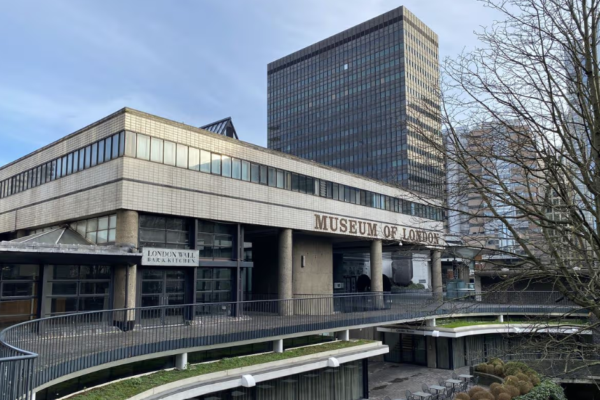
The High Court has today handed down judgment in R (Barbican Quarter Organisation Ltd) v City of London [2026] EWHC 687 (Admin). It reinforces the need to achieve functional separation through compliance with appropriate handling arrangements when the local authority is both developer and decision-maker. And it addresses the detailed engagement with carbon optioneering and whole life-cycle evidence and assessment which is needed where an aspect of a key sustainability policy is avoidance of demolition.
The City of London (“the developer”) applied to itself (“the LPA”) for planning permission in respect of part of the Barbican Estate. In particular, the developer sought permission to demolish the Museum of London Rotunda and Bastion House, and replace them with considerably larger buildings.
This case in 60 seconds
Case: R (Barbican Quarter Organisation Ltd) v City of London [2026] EWHC 687 (Admin)
What happened
- The City of London Corporation acted as both developer and decision-maker.
- Planning permission granted for demolition and redevelopment at and next to the Barbican.
Key findings
- Functional separation (EIA Regs):
- Appropriate arrangements must be implemented, not just documented.
- Breach occurred (restricted documents accessible).
- Permission still upheld – no evidence anyone accessed them; outcome “inevitably” the same.
- Demolition & sustainability policy (CS15):
- Avoiding demolition only one way a multi-pronged policy sought to achieve sustainability.
- Overall compliance with such policies is a matter of planning judgment.
- Carbon assessment:
- Carbon optioneering + whole life-cycle analysis were sufficient in this case because they considered a number of alternatives.
- “Retention scenarios” counted as considering demolition avoidance.
Outcome
- Claim dismissed; no automatic quashing for procedural breach.
Counsel
- For BQO: Estelle Dehon KC and Riccardo Calzavara, instructed by Leigh Day.
The handling note identified the officers in the employ of the City who would be exercising the LPA function, and the officers who would be exercising the developer function. It provided that all LPA documents “which would not normally be shared with an Applicant” should be stored on file space that was inaccessible to any person exercising the developer function. The LPA failed to comply with that direction by, in particular, leaving accessible four folders containing documents that were, but should not have been, accessible to the developer. In the course of the subsequent judicial review claim, the developer confirmed that notwithstanding those LPA-only documents being accessible, none of its officers in fact accessed any documents to which she should not have had access.
The claimant (“BQO”) asserted that there was a clear breach of the handling note, which gave rise to a breach of the reg.64(2) duty; that breach infected the grant of planning permission; its effect, because breaches of EIA statutory duties are necessarily material, relating as they do to public confidence in the process, rather than merely the outcome, was to vitiate the grant of permission; and the said grant should be quashed, because the public had not had the benefit of a planning decision imbued with functional separation, and because it cannot be said that the outcome is highly likely to have been the same when it is understood that the “outcome” in question is one of process.
Judgment
Fordham J (“the Judge”), held that BQO had been correct to assert that the need to ensure functional separation under the EIA Regs was not an “oscillating requirement – now you see it now you don’t – depending on whether the substance of the planning merits engages the EIA or the environmental information”. BQO was correct to assert that the need to “make” appropriate arrangements to ensure functional separation meant both that the City was require to design and that it was required to deliver such arrangements; it was not enough that the handling note contained a lawful approach if that approach was not in fact followed. BQO was correct to assert that, in failing to preclude access to the four folders referred to above, the LPA had breached the handling note and, in turn, reg.64(2); the LPA was obliged to “deliver what it identifie[d] as appropriate”.
However, the Judge went on to conclude that the decision-making process and the decision to grant planning permission would “inevitably” have been the same had the breach not occurred, because (as above) none of the developer-officers in fact accessed any documents that ought properly to have been inaccessible: “nobody opened the unlocked door”. He further concluded that, for the purposes of s.31(2A) Senior Courts Act 1981, the “outcome” in issue under reg.64(2) (because of its particular focus) was the grant of planning permission per se, and that in any event the “public interest and public confidence stand restored” because the judicial review process had evidenced that nothing inappropriate in fact happened in the decision-making process. And, finally, the Judge held that the fact of a breach of reg.64(2) per se did not lead to an “automatic vitiating consequence”; instead the question was whether functional separation was maintained. Accordingly, Ground 1 was dismissed.
Grounds 2-3 related to demolition; in particular BQO contended that the LPA failed to understand its sustainability policy (CS15) or properly address the limb of that policy which required the avoidance of demolition, and that it failed to conduct the enquiries necessitated by the said policy in order to give full consideration to alternatives that avoided demolition. The Judge concluded that the policy overall did not contain “a presumption or expectation against demolition”; instead, avoidance of demolition was “one recognisable way of achieving the purposes of sustainability”. It did not engage a hard-edged question of interpretation, but one of planning judgment as to the best way to achieve the overall purpose of sustainability. The fact that demolition would occur was relevant as one of the “best ways to create a more sustainable City, adapted to the changing climate”, but would not, in and of itself, necessarily constitute a conflict with the policy, depending on the circumstances of the development under consideration.
The Judge held that the LPA had given reasons for concluding overall compliance with CS15, because of the references in the officer’s report to the main Policy Guidance Note on Carbon Optioneering and the developer’s carbon optioneering exercise and whole life-cycle carbon assessment. The Judge read the analysis of, and reasons relating to, the “retention and use scenarios” as being the same thing as demolition avoidance scenarios. He found that, given the consideration of “the carbon picture”, there was no public law inadequacy.
He also went on to conclude that the LPA had not been required to make further enquiries of the developer, and in particular had not been required to investigate whether there were workable alternative proposals at the site that involved less demolition, notwithstanding the developer having conducted a soft market exercise which revealed the very same.
The claim was, accordingly, dismissed.
Counsel
Estelle Dehon KC and Riccardo Calzavara, instructed by Ricardo Gama and Lily Hartley-Matthews of Leigh Day, appeared on behalf of BQO.
For more information on the case, including why appeal is not being pursued, see here.
Image courtesy of Jan-Marc Petroschka